1. We were honored when you found The Woman Project and reached out to us. Tell us a bit about yourself and your organization. Additionally, how did you find TWP?
I am a human rights attorney who works in service of reproductive justice — applying my legal calling to ensuring that that everyone has the rights and resources they need to determine if, when, and how to get pregnant, give birth, and maintain a family. I am Senior Counsel for the SIA Legal Team, which transforms the legal landscape so people who end their own pregnancies can do so with dignity and without punishment. The SIA Legal Team came into being because of questions from advocates in the reproductive health and justice movements who were alarmed by a simultaneous decrease in access to abortion in clinics and a rise in prosecutions of people who ended their own pregnancies.
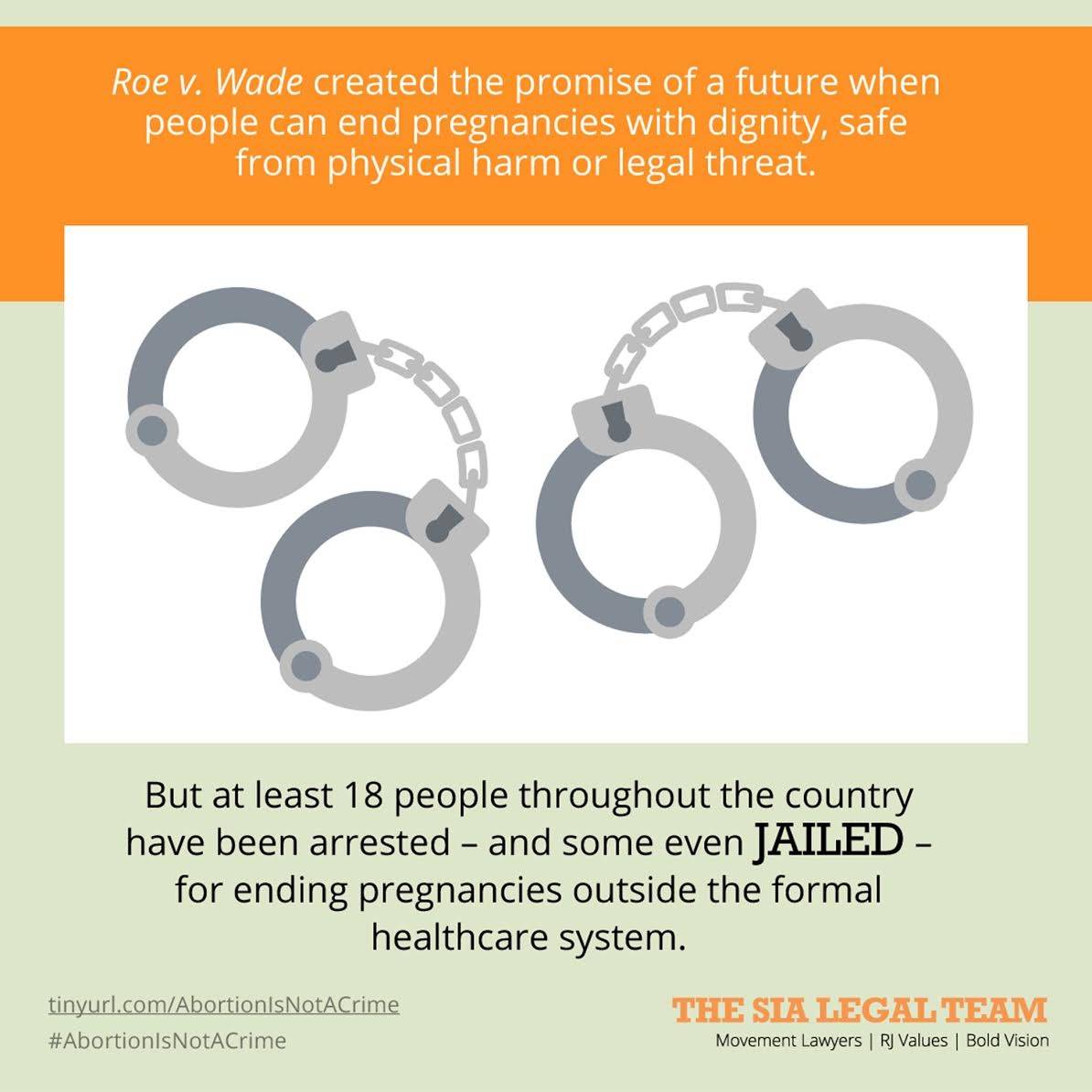
We discovered TWP shortly after we finished our report Roe’s Unfinished Promise: Decriminalizing Abortion Once and For All. In conducting a 50-state survey of the ways that people have been criminalized for ending their own pregnancies, we noticed that the states in which the law makes people vulnerable to criminalization are not always the ones one might expect. For instance, my (adopted) home state of New York enjoys relatively good access to abortion care, but people who opt-out or are pushed out of the formal medical systems can be criminalized under a “self-abortion” law from the 1800s.
Rhode Island is one of the states that passed laws forbidding the “willful killing of an unborn quick child” in the years after Roe to protect pregnant people from acts of violence by others that would prompt a miscarriage, but failed to clarify that people shouldn’t be criminalized for causing their own abortion. Generally, criminal laws can’t be used in ways that aren’t clearly intended by the language they use, but prosecutors across the country have seized upon laws like Rhode Island’s to charge people with crimes for ending or losing a pregnancy.
The research led us to start looking for the folks who are doing the critical work of improving their own state laws in ways that would halt the criminalization of self-managed abortion. Some of this work comes from policy advocates, but I believe that the real magic happens when ordinary folks start telling their stories and demand accountability from their lawmakers. TWP, of course, is one of these groups, and you’re in increasingly good company as people have been jolted awake by the changes sweeping our country. Groups like TWP give me hope that even while it feels like things are crashing down around us, there are people committed to making progress wherever we can. Our purpose as lawyers is to break down the barriers and help that happen.
2. TWP has been working to pass a bill that codifies Roe v Wade into RI state law. What kind of issues to do see coming if Roe v. Wade is overturned, in the state and beyond.
If Roe v. Wade is overturned, abortion becomes a matter of politics rather than a matter of health. People have a vague idea — as Trump expressed during a town hall debate in 2016 — that things would go back to the way they were prior to Roe. There are some problems with this. First of all, human rights shouldn’t be politicized: it is unacceptable that someone’s ability to self-determine their reproductive life would be dictated by where in the country they happen to live. But more importantly, a lot has changed in the intervening years after Roe. When abortion first started to be criminalized in the mid-19th Century, it was rare for people to be charged with a crime for ending their own pregnancy. The criminal laws were mostly passed at the behest of the newly-professionalizing medical field to keep midwives and herbalists out of the business of pregnancy, and laws criminalizing self-inducing or “submitting to” an abortion were mostly used to coerce people into naming abortionists. But nowadays, pregnant people have been charged with homicide offenses for ending a pregnancy. Trump’s since-retracted statement that people should face “some form of punishment” for having abortions could become the new reality if states don’t act now to repeal harmful old laws and enact new ones that protect people’s reproductive freedom. Rhode Island’s abortion restrictions are already enjoined and deemed unconstitutional, but leaving them on the books just creates a ticking time bomb for if Mike Pence gets his way and Roe is “consigned to the ash heap of history.”
3. NARAL has given RI a ‘F’ rating for how the law handles the issue of abortion. For the last 25 years a bill has been presented to our legislature be voted on for reproductive freedom in the state and each year is has been overlooked or “shelved.” Even though you are not a resident of Rhode Island, you have made abortion law your passion.
I’d say that my passion is ensuring that people have self-determination and dignity in all aspects of their reproductive lives, whether that is having the support they need to end a pregnancy on their terms — wherever and however that might take place — or to have a healthy pregnancy and give birth free from coercion and violence. When we look at the full spectrum of people’s reproductive needs, Rhode Island is actually not alone in its neglect for ensuring reproductive freedom for everyone within its borders. But the onus is on the states that have lawmakers who profess to be “pro-choice” to ensure that people are able to make meaningful choices without fearing criminalization or deepening poverty. Rather than passing the buck on to the Supreme Court, they should be taking the initiative to bring their states’ laws into the 21st Century.
4. How many lawyers are responding well to you work? What kind of push back do you receive?
I’ve been overwhelmed by the positive response — people stop my colleagues and me and thank us for the work we’re doing. Especially after the 2016 election, people want to know what the law is and what the threats are, and what they can do to help. They want to know more about histories like the Jane Collective, HIV medication “buyers clubs,” and needle exchange, and how they can bring these histories to life for people needing self-help in the present day and change the laws to eliminate the conditions where criminalization thrives. And as far as lawyers, we’ve been approached by all kinds — lawyers specializing in criminal defense, intellectual property, internet law, FDA regulation, civil rights, family law, and even in unrelated practice areas — who want to help, and even get involved in the legal defense and referral network we’re building.
In terms of pushback, the argument that has been most baffling to me is the idea that the state should protect people by criminalizing them. People who aren’t familiar with self-managed abortion are most immediately concerned with safety and a general sense that they don’t want people doing their own health care. But the idea that the state should seek to prevent self-harm by threatening people with harms including jail, deportation, or loss of child custody simply doesn’t make sense. There is also a logical gap in the idea that we want people to seek medical help in an emergency, but then create a system where they might be punished for seeking it. Criminalization only serves to marginalize and control — especially communities of color and people living in poverty — and disconnects people from the systems of care that they rely on for survival.
5. Is there anything else you would like to add?
Sometimes people equate our message that people should be treated with dignity and not have to fear arrest for ending their own pregnancies with saying “everyone should be doing their own abortions and not going to clinics.” That couldn’t be further from reality. Clinics, and the good people who work there, are doing some of the most important, urgent work in the world, and they will always be a vital part of delivering needed care. But as a lawyer, I’m drawn to serve the people most likely to be targeted by hurtful laws — people who are overpoliced, whose ancestors have experienced unwanted reproductive testing or treatment at the hands of the some in the medical community, who fear deportation, whose gender or gender presentation might not be affirmed when they’re seeking reproductive health care. This means acknowledging that there is some number of people for whom clinic-based abortion care is just not an option. We are proud to work with many incredible advocates dedicated to making clinics more available, accessible, and welcoming — our work is to make sure that nobody gets left behind.
– – – – – – – – –
If you would like to reach out to Farah, please email her through her website linked above.

 1. We were honored when you found The Woman Project and reached out to us. Tell us a bit about yourself and your organization. Additionally, how did you find TWP?
 2. TWP has been working to pass a bill that codifies Roe v Wade into RI state law. What kind of issues to do see coming if Roe v. Wade is overturned, in the state and beyond.


